Shafts
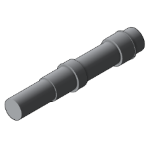 | A shaft consists of:
and is connected to the gear unit via an assembly relation. |
Modeling Guideline Static Analysis
Each shaft must have at least one shaft section.
Required components | XML syntax |
|---|---|
Shaft | <component id="3" type="shaft"> ... </component> |
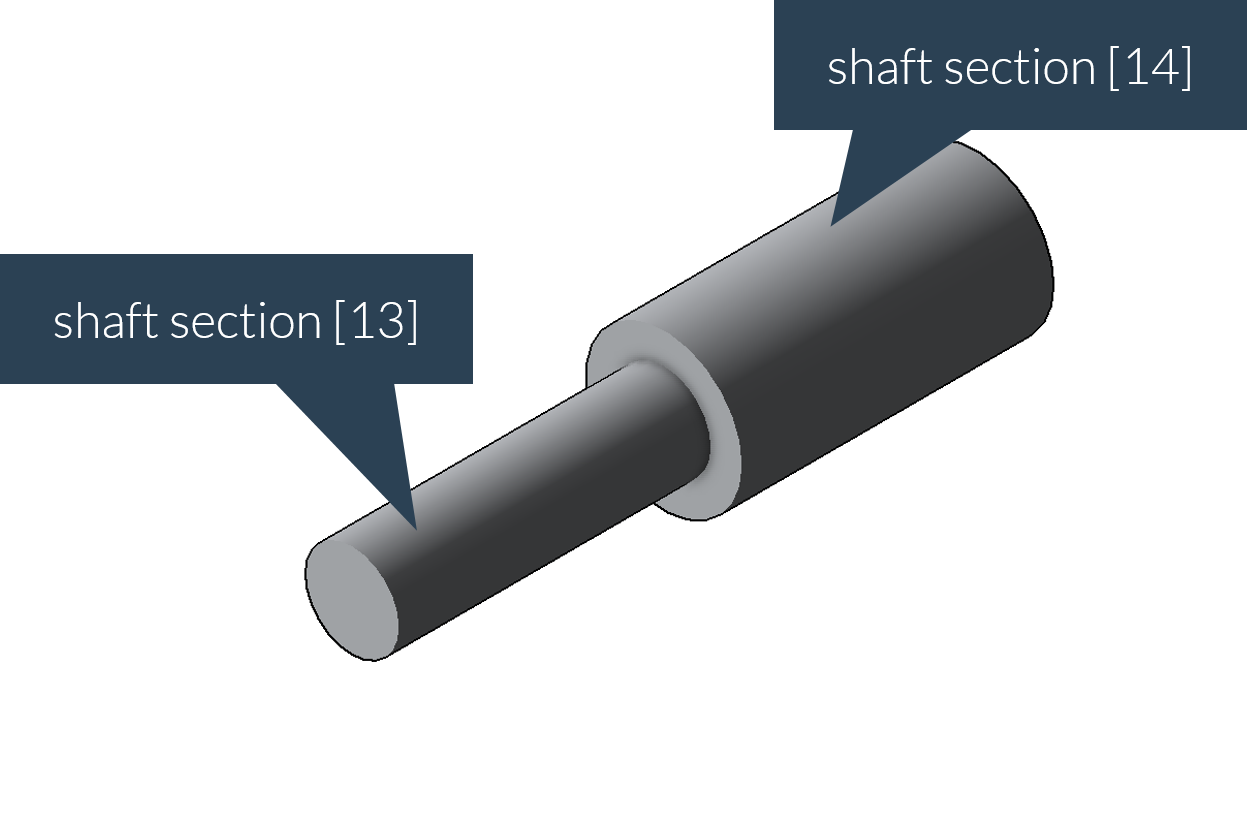
Shaft section | <component id="113" type="shaft_section"> ... </component> |
Required relations | XML syntax |
|---|---|
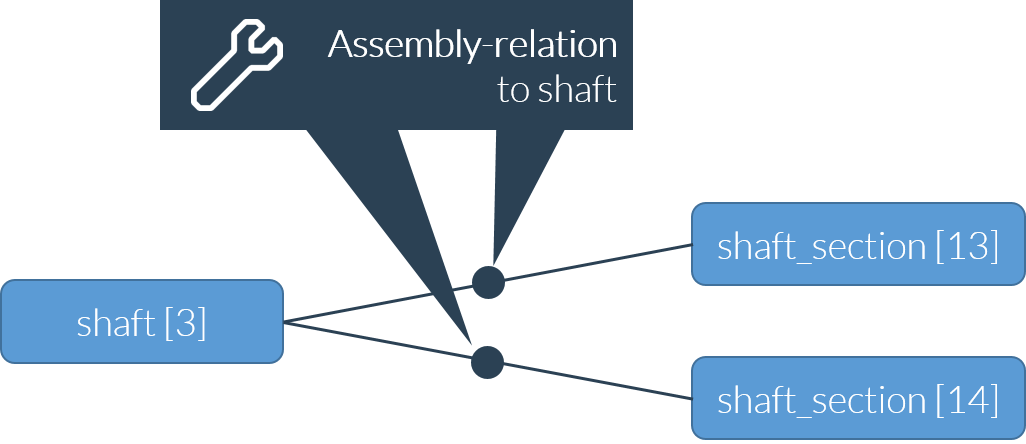
Assembly relation Shaft - shaft section | <relation id="1" type="assembly"> <ref id="3" role="assembly" hint="shaft"/> <ref id="13" role="part" hint="shaft_section"/> </relation> |
Assembly relation Gear unit - shaft | <relation id="2" type="assembly"> <ref id="1" role="assembly" hint="gear_unit"/> <ref id="3" role="part" hint="shaft"/> </relation> |
Table 5. Example - model of a shaft with two sections
 |  |
Modeling Guideline Static Analysis
The mechanical model must be statically determined; no (excited) rigid body modes may remain in the system.
In particular, this means that each shaft must be supported in the inertial system by at least one connecting component. Possible connecting components are:
Bearings
Couplings
Switchable coupling
Shaft-hub connection